Diocese of Nashville

"Living and Proclaiming the Good News of Jesus Christ, Welcoming All!"

Since 1837

The Diocese of Nashville

Established in 1837, the Diocese of Nashville spans 38 counties in Middle Tennessee and is committed to proclaiming the Gospel, supporting families, educating future generations, and serving those in need.

The Diocese of Nashville serves 126,000+ faithful Catholics of Middle Tennessee with its 61 churches, 16 Catholic schools, 109 priests, and dozens of ministries.

Coat of Arms

The Diocese of Nashville Shield

Diocese of Nashville shield

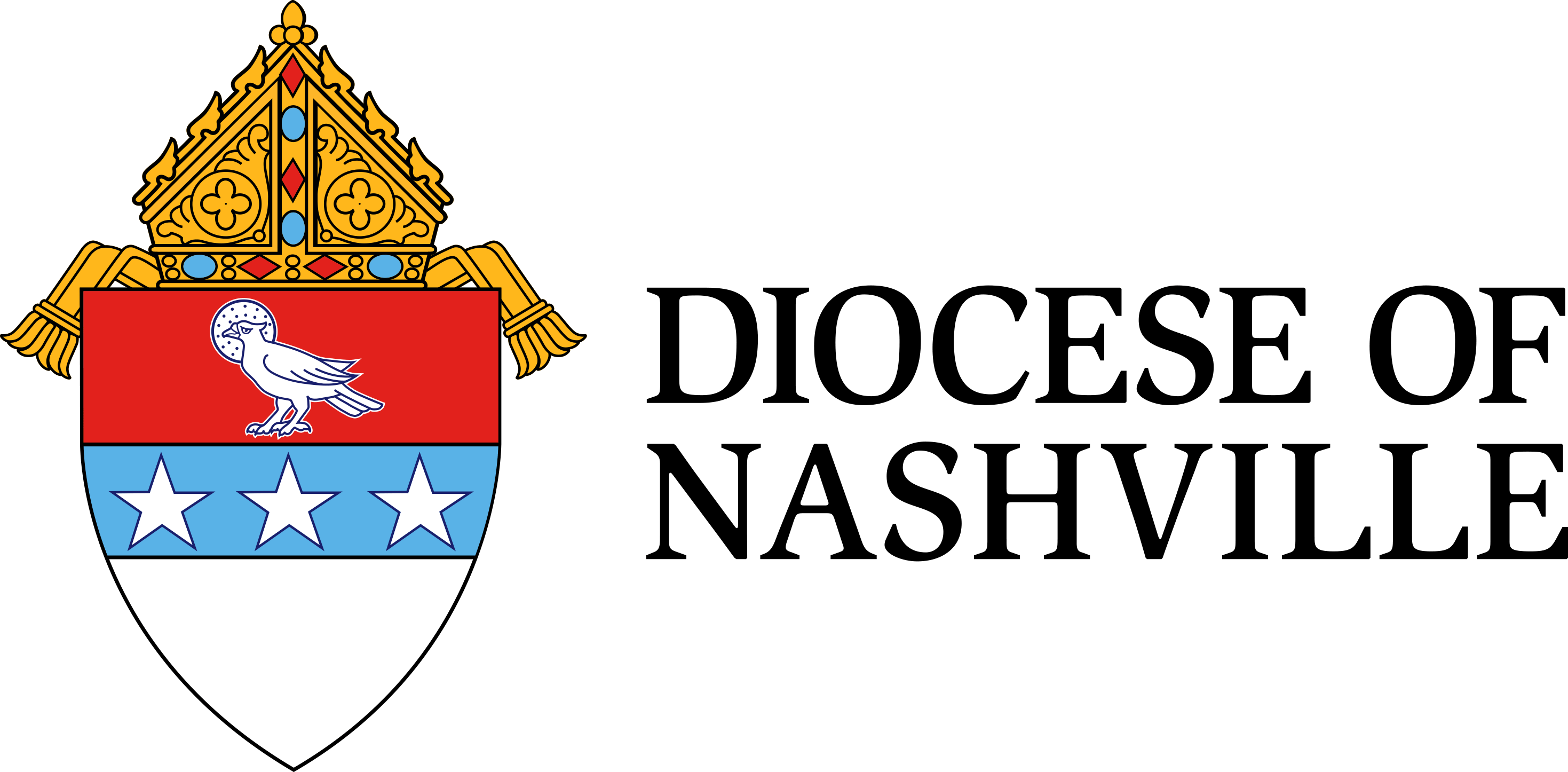
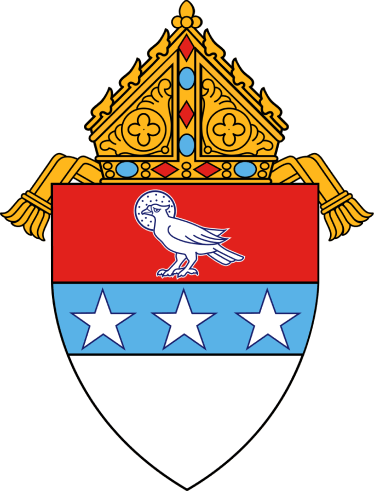
The coat of arms of the Diocese of Nashville depicts a dove with a halo on a red field above a blue bar with three silver stars.

The overall theme of the shield comes from the family coat of arms of Pope Gregory XVI, who was pope (1831-1846) when the diocese was founded in 1837.

The dove was a symbol of the family of Francis Nash (1742-1777), a Revolutionary War general for whom Nashville is named. The haloed dove also is a symbol of the Holy Spirit, which Scripture describes as "descending like a dove."

When the diocese was founded, it included the entire state of Tennessee. The three silver stars symbolize the Holy Trinity and the three grand divisions of the state: East, Middle, and West Tennessee.

The blue bar is in honor of the Blessed Virgin Mary, who is the co-patron of the diocese.

Serving Middle Tennessee

Diocese of Nashville 2026 statistical information based on 2025 Official Catholic Directory data.

1837 Established
38 Counties
16,302 Square Miles
126,251 Registered
Catholics
61 Churches
109 Priests
103 Permanent Deacons
373 Religious Sisters
35 Seminarians
19 Catholic Schools
6,358 Students
1 Catholic Colleges
11 Hospitals
2 Senior Living Facilities
9 Special Care Centers
Our History

The Story of the Diocese of Nashville

From scattered frontier Catholics and horseback missionaries, the Diocese of Nashville grew into a network of parishes, schools, hospitals, charitable ministries, and diverse communities serving Middle Tennessee. What follows is the story of that journey, in five chapters.

Key Timeline

Key Timeline

The events most consequential to the development and identity of the diocese.

Explore the History 1 of 22
Milestone 01
1540
Diocese History

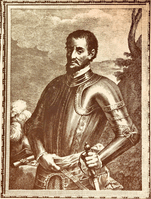
Priests traveling with Hernando de Soto likely celebrate the first Masses in the territory that would become Tennessee.

Timeline progress 1 / 22
History of the Diocese

Explore the Chapters

Move through the history of the Diocese of Nashville chapter by chapter.

Chapter One

From Wilderness Missions to a Diocese

1540–1837
Chapter in Brief

Catholic life in Tennessee began through exploration, migration, lay hospitality, and missionary priests who served scattered communities long before a formal diocese existed.

The earliest known Catholic presence in Tennessee came with the Spanish expedition of Hernando de Soto in 1540. At least eight priests accompanied the party, and their encampment near Moccasin Bend in present-day Chattanooga likely included one of the first celebrations of Mass in the territory. The expedition left no permanent community, but it marked the beginning of the Church's recorded presence in Tennessee.

A lasting Catholic foothold developed much later through French settlers and traders. Jacques-Timothée Demonbreun, a devout Catholic from Quebec, became an early merchant and permanent settler in Nashville. His home provided hospitality for visiting priests and became one of the places where the sacraments were celebrated for the small Catholic population.

After the Diocese of Bardstown was created in 1808, Bishop Benedict Joseph Flaget became responsible for a territory stretching from Tennessee to Michigan. He repeatedly warned that Tennessee Catholics lacked regular pastoral care. Missionaries such as Stephen Theodore Badin and, beginning in 1820, Father Robert Abell traveled by horseback to bring Mass and the sacraments to isolated families.

Irish workers recruited to build Nashville's first bridge formed the state's first sizable Catholic community. In their spare time they built Holy Rosary on Cedar Knob, the site of the present-day State Capitol. The church was modest and short-lived, but it demonstrated that Catholic life in Tennessee was becoming organized and permanent.

On July 28, 1837, the Holy See created the Diocese of Nashville from the Diocese of Bardstown. The new diocese covered the entire state of Tennessee. It began with only one church, no resident priest, and Catholics scattered across a vast frontier — but it now possessed the structure needed to grow.

Historic image of Hernando de Soto

Hernando de Soto, whose expedition's priests likely celebrated the first Masses in Tennessee, 1540.

Chapter Two

Building the Church Across Tennessee

1837–1860
Chapter in Brief

Under the first bishop, the Diocese of Nashville moved from a missionary outpost toward a statewide institution with clergy, schools, parishes, and a cathedral.

Richard Pius Miles, a Dominican educator and missionary, became the first Bishop of Nashville. Consecrated in 1838, he arrived as the only Catholic clergyman responsible for approximately 42,000 square miles. He traveled the state by horseback, locating Catholic families and establishing missions wherever railroads, trade, and immigration created new communities.

The new diocese lacked both clergy and money. Bishop Miles recruited priests, presided over Tennessee's first priestly ordination, and traveled to Europe to seek financial assistance. Support from the Society for the Propagation of the Faith helped purchase land and sustain the Church during its earliest years.

Women religious quickly became essential to the diocesan mission. In 1842, six Sisters of Charity of Nazareth arrived to open Saint Mary Female Academy in Nashville. Their work established a pattern that would define the diocese for generations: religious communities providing education, healthcare, and direct service where public resources were limited.

The Cathedral of the Seven Dolors was completed in 1847. Now known as Saint Mary of the Seven Sorrows, it gave Nashville Catholics a visible and permanent place in the city. At the same time, parishes and missions spread beyond the capital into Clarksville, Chattanooga, Knoxville, Memphis, and smaller communities across Tennessee.

Immigration shaped these early parishes. Irish, German, and Italian Catholics often worshipped in congregations organized by language and culture. In Memphis, Saint Peter served the Irish community, Saint Mary served German Catholics, and Saint Joseph later served Italian Catholics. This diversity strengthened the Church but also presented a future challenge: creating a unified diocesan identity from distinct communities.

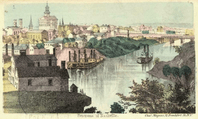
Nashville on the Cumberland River, c. 1855

Nashville on the Cumberland River, c. 1855, as the young diocese took root.

Chapter Three

War, Suffering, and Institutional Growth

1860–1914
Chapter in Brief

Civil war, economic ruin, and epidemic disease tested the diocese, but Catholic institutions became more deeply rooted through education, healthcare, and service to people in need.

Bishop Miles died in 1860 as the nation approached the Civil War. His successor, Bishop James Whelan, led a diocese divided by the conflict. Whelan's pro-Union position and opposition to slavery isolated him in a region where many Catholics supported the Confederacy. He resigned in 1863, leaving the diocese damaged by war and uncertainty.

The same period brought one of the diocese's most enduring institutions. The Dominican Sisters opened Saint Cecilia Academy in 1860, the first private school for women in Tennessee, and later established Saint Mary Orphanage. During the war, Saint Mary of the Seven Sorrows served as a hospital, while Catholic schools continued educating children who remained in Nashville.

Bishop Patrick Augustine Feehan arrived in 1865 and found the diocese in severe moral and financial distress. He rebuilt pastoral life by establishing the Saint Vincent de Paul Society, caring for orphans, welcoming the Sisters of Mercy, and supporting Saint Bernard Academy. His leadership linked diocesan recovery with direct service to the poor.

The yellow-fever epidemics of the 1870s devastated Memphis. Thousands died, including large numbers of Catholics. Priests and religious sisters refused to abandon the city, cared for the sick, and replaced those who died in service. Their sacrifice became one of the clearest expressions of the Church's public mission in Tennessee.

Under Bishops Joseph Rademacher and Thomas Sebastian Byrne, the diocese expanded churches, schools, hospitals, and cemeteries. Byrne sought to overcome ethnic divisions by organizing parishes geographically and promoting comparable services across the diocese. The Daughters of Charity founded Saint Thomas Hospital in 1898. Holy Family Church opened for Black Catholics in 1900, and in 1905 Byrne invited Saint Katharine Drexel and the Sisters of the Blessed Sacrament to establish Immaculate Mother Academy, which included Tennessee's first Catholic secondary school for Black students.

Bishop Byrne convened the first diocesan synod in 1905 and oversaw construction of a new cathedral complex. The Cathedral of the Incarnation was dedicated in 1914, marking the transition from a frontier church to a mature diocesan institution.

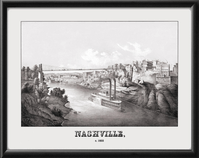
Panorama of Nashville from the Civil War era

A panorama of Nashville from the Civil War era, when the city was occupied and contested.

Chapter Four

Education, Charity, and Public Witness

1914–1975
Chapter in Brief

The diocese strengthened local vocations, expanded Catholic education and social service, and increasingly addressed the moral questions confronting American society.

Bishop Alphonse John Smith focused on developing a native clergy. When he arrived, the diocese depended heavily on priests recruited from elsewhere. Within two years he had drawn sixty Tennessee men into seminary formation, and twenty-six diocesan priests were ordained during his tenure. He also formalized geographical parish boundaries and expanded Catholic education, including the opening of Father Ryan High School in 1925.

Bishop William Lawrence Adrian continued institutional growth across Tennessee. New parishes and churches served expanding cities and remote communities, while the Holy Family Motor Chapel carried Catholic ministry into rural areas. Adrian also reorganized diocesan administration and supported the development of Saint Mary Villa and Catholic Charities, two major expressions of the Church's care for children, families, refugees, older adults, and people in crisis.

Catholic Charities began by helping find homes for Cuban refugee children and grew into a broad social-service network. Over time, it provided adoption and counseling services, refugee resettlement, healthcare connections, support for immigrants, assistance to people with AIDS, and disaster relief. This work extended a long diocesan tradition in which worship and public service were treated as inseparable.

The civil-rights movement required more direct moral leadership. Catholic schools were among the first Nashville schools to integrate, but many Christians remained hesitant to confront racial injustice. Bishop Joseph Aloysius Durick, the first native-born Tennessean to lead the diocese, treated civil rights as a matter of faith. Having been among the clergy addressed in Martin Luther King Jr.'s Letter from Birmingham Jail, Durick joined marches, supported Black workers in Memphis, and urged Catholics to accept responsibility for social change.

Durick also strengthened prison ministry and led the local reception of the Second Vatican Council, promoting collaboration among priests and laity. In 1970, the Diocese of Memphis was established from territory west of the Tennessee River, reducing the geographic size of the Diocese of Nashville and reshaping its pastoral responsibilities.

Holy Family Catholic Motor Chapel

The Holy Family Catholic Motor Chapel carried Catholic ministry into rural Tennessee.

Chapter Five

A Middle Tennessee Diocese and the Modern Mission

1975 onward
Chapter in Brief

The modern diocese has concentrated on parish expansion, long-range planning, vocations, lay and ordained leadership, cultural diversity, and a unified mission for Middle Tennessee.

Bishop James Daniel Niedergeses led a period of strong rural and suburban growth. A native of Lawrenceburg, he founded the Catholic Foundation of Tennessee to secure land and support new parishes in communities across Middle Tennessee, including Tennessee Ridge, Sparta, Lafayette, Smithville, Waynesboro, Franklin, Smyrna, and Brentwood.

The creation of the Diocese of Knoxville in the late 1980s completed Nashville's transformation from a statewide diocese into a primarily Middle Tennessee jurisdiction. Bishop Edward Urban Kmiec then introduced long-range planning, renewed attention to priestly vocations and the permanent diaconate, and oversaw new schools, including Pope John Paul II High School — now Pope John Paul II Preparatory School — dedicated in 2002.

Bishop David Raymond Choby, a native Nashvillian, was known for personal accessibility and close support of seminarians, priests, deacons, and religious communities. In 2014, the diocese acquired the Catholic Pastoral Center as a central location for worship, administration, ministry, and diocesan gatherings.

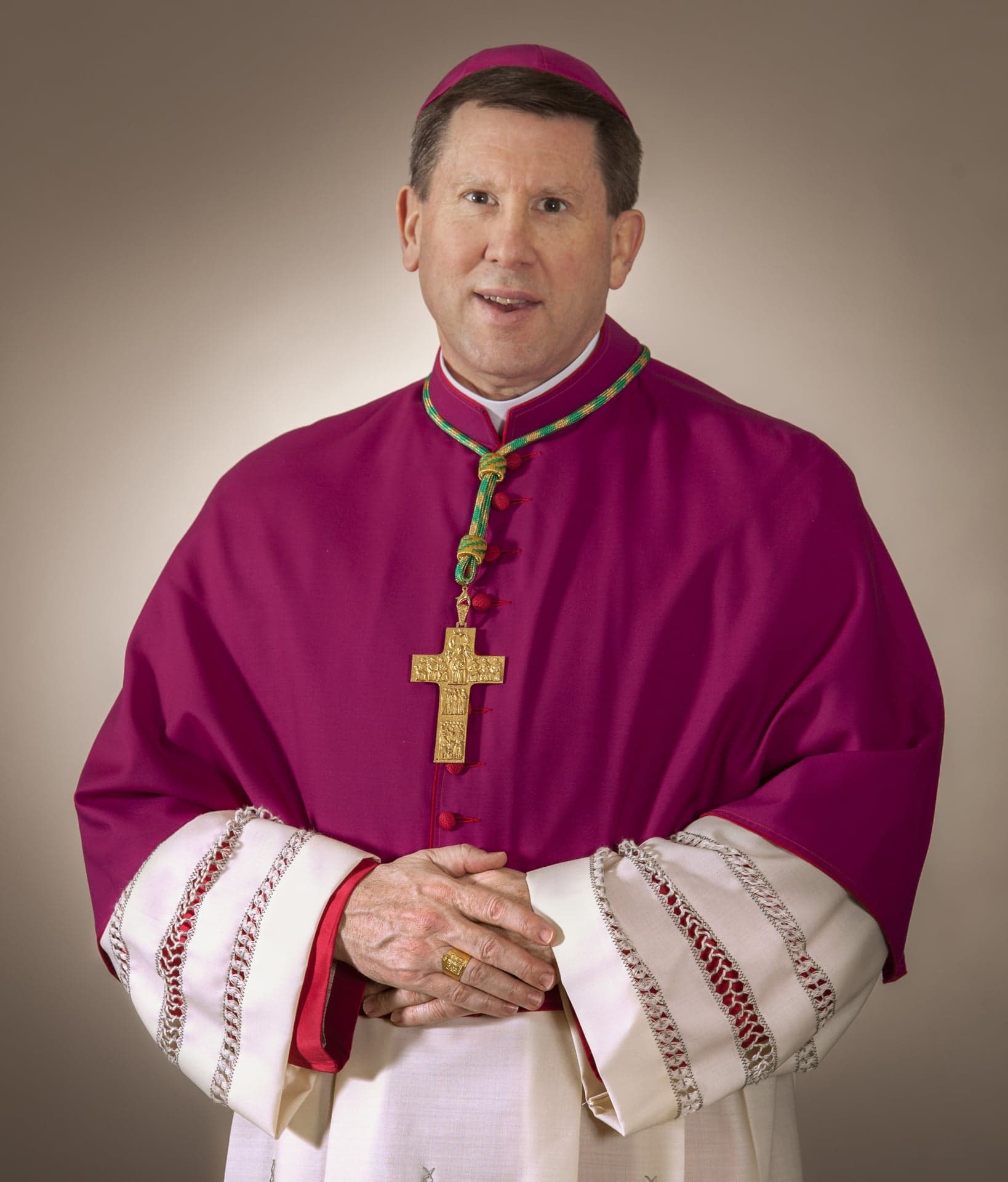
J. Mark Spalding was ordained and installed as the twelfth Bishop of Nashville in 2018. His installation message centered the diocese on the love of Christ and the responsibility to help lead others to salvation — continuing the themes that have shaped Nashville Catholic history: missionary faith, community, service, and welcome.

Bishop J. Mark Spalding

Bishop J. Mark Spalding, twelfth and current Bishop of Nashville, installed in 2018.

Chapter 1 of 5